
Cancer continues to be one of the world’s most significant healthcare challenges. While advances in diagnosis and treatment are creating new opportunities for patients, the global burden of cancer is also increasing.
The latest WHO Global Status Report on Cancer 2026 highlights an important contradiction: scientific progress in cancer care is accelerating, but significant inequalities remain in prevention, diagnosis, treatment and survival.
WHO estimates that there were around 20.6 million new cancer cases and nearly 10 million cancer deaths globally each year based on the latest available estimates. Without stronger action, annual cancer cases could rise to nearly 35 million by 2050.
This makes cancer prevention and early detection increasingly important priorities for healthcare systems worldwide.
The Growing Global Cancer Burden
Cancer affects people across virtually every country and age group. However, the burden is not distributed equally.
Differences in healthcare infrastructure, screening availability, affordability, treatment access and socioeconomic conditions can significantly influence outcomes.
In many settings, patients may receive a diagnosis only after cancer has progressed. Later-stage diagnosis can make treatment more complicated and potentially reduce available treatment options.
The challenge is therefore not only discovering new cancer treatments. Healthcare systems also need to improve prevention, screening, diagnosis and access to quality care.
Why Cancer Prevention Matters
Cancer prevention is one of the most cost-effective opportunities available to healthcare systems.
Not every cancer can be prevented, but a significant proportion of cancer cases are linked to modifiable or preventable risk factors.
A 2026 analysis from WHO’s International Agency for Research on Cancer (IARC) found that up to four in ten cancer cases worldwide could potentially be prevented. The analysis examined 30 preventable causes, including tobacco, alcohol, high body mass index, physical inactivity, air pollution, ultraviolet radiation and cancer-causing infections.
This highlights the importance of prevention strategies alongside medical treatment.
Key areas include:
- Tobacco control
- Healthy lifestyle promotion
- Vaccination
- Physical activity
- Reducing harmful alcohol consumption
- Protection from excessive UV exposure
- Air pollution reduction
- Infection prevention
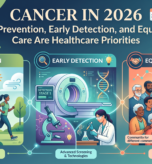
The Importance of Early Detection
Early detection can make a major difference in cancer care.
Screening programmes aim to identify certain cancers or precancerous changes before symptoms become obvious.
Depending on the cancer type and individual circumstances, screening may involve imaging, laboratory tests, physical examinations or other diagnostic methods.
However, screening programmes need to be carefully designed. Simply increasing screening is not enough. Healthcare systems also need reliable follow-up, diagnostic capacity and access to appropriate treatment.
If a screening programme identifies a potential problem but patients cannot access confirmatory testing or treatment, its overall impact can be limited.
New Focus on Cervical Cancer Prevention
Cervical cancer is an important example of how prevention and early detection can work together.
Human papillomavirus (HPV) infection is a major cause of cervical cancer, and vaccination and HPV-based screening provide important opportunities for prevention and early intervention.
In July 2026, WHO published updated evidence-informed guidance supporting countries in implementing HPV DNA-based cervical cancer screening programmes.
This reflects a broader healthcare shift toward prevention-based approaches.
Cancer Care Is Also About Equity
Scientific innovation does not automatically guarantee equal healthcare outcomes.
Advanced treatments may be available in some countries and healthcare systems while remaining inaccessible to many patients elsewhere.
The 2026 WHO cancer report emphasises persistent disparities in cancer outcomes and calls for stronger capabilities, protections and value across the cancer care continuum.
Equitable cancer care requires investment in:
- Screening
- Diagnostic infrastructure
- Oncology specialists
- Medicines
- Radiotherapy
- Surgery
- Palliative care
- Patient support
- Cancer registries
- Reliable health data
The Role of Healthcare Research
Research remains essential for improving cancer outcomes.
Researchers are studying new medicines, treatment combinations, biomarkers, diagnostics and approaches to personalised care.
However, research should not focus only on treatment.
Prevention, implementation, health economics, patient experience and access to care are equally important.
The 2026 global cancer report places significant emphasis on the gap between scientific progress and the ability of health systems to ensure that people actually benefit from that progress.
The Future of Cancer Care
The future of cancer care will likely involve a combination of prevention, earlier diagnosis, better treatments and more patient-centred services.
Healthcare systems will increasingly need to ask four questions:
Can we prevent more cancers?
Can we detect cancers earlier?
Can we provide effective treatment to more people?
Can we improve quality of life for people living with cancer?
Answering these questions requires collaboration between governments, healthcare providers, researchers, pharmaceutical companies, diagnostic organisations and communities.
Conclusion
Cancer remains a major global healthcare challenge, but there are also significant opportunities for progress.
The 2026 WHO cancer report demonstrates that scientific advances are occurring alongside persistent inequalities in access and outcomes.
Prevention, vaccination, screening, early diagnosis and equitable treatment must therefore remain central to healthcare strategies.
The future of cancer care will not be defined only by the discovery of new medicines. It will also depend on how effectively healthcare systems can ensure that proven prevention and treatment strategies reach the people who need them.
Frequently Asked Questions
1. What are the major cancer trends in 2026?
Major trends include increasing global cancer incidence, greater emphasis on prevention and early detection, advances in treatment and continuing disparities in access to care.
2. Can cancer be prevented?
Not all cancers are preventable, but evidence indicates that a substantial proportion of cancer cases could potentially be prevented through measures such as tobacco control, vaccination, healthy lifestyles and reducing environmental risks.
3. Why is early cancer detection important?
Detecting cancer earlier can provide opportunities for timely diagnosis and treatment and may improve outcomes for certain cancers.
4. What is the role of HPV vaccination in cancer prevention?
HPV vaccination can help prevent infections associated with several cancers, particularly cervical cancer.
5. What is the biggest challenge in global cancer care?
One major challenge is ensuring that advances in prevention, diagnosis and treatment are accessible to populations across different countries and income groups.