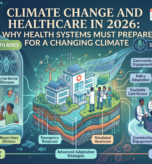

Climate change is increasingly becoming a healthcare issue.
Extreme heat, changing weather patterns, floods, droughts, air pollution and changing patterns of infectious diseases can affect both individual health and the ability of healthcare systems to deliver services.
The impact is particularly significant for vulnerable populations, including older adults, children, people with existing health conditions and communities with limited access to healthcare.
In 2026, climate and health are receiving increasing attention from global health organisations. WHO has highlighted the connection between climate change, migration, displacement and access to healthcare, while developing new research priorities around this growing challenge.
Healthcare systems therefore need to prepare not only for today’s health needs but also for climate-related risks that may become more frequent or severe.
How Climate Change Affects Human Health
Climate change can affect health through multiple pathways.
Extreme Heat
Heatwaves can increase the risk of heat-related illness, dehydration and other health complications.
People who are older, very young or living with certain chronic conditions may be particularly vulnerable.
Hospitals and emergency services can also experience increased demand during extreme weather events.
Air Pollution
Climate-related changes can interact with air pollution and increase exposure to harmful pollutants.
Poor air quality can worsen respiratory and cardiovascular conditions and create additional pressure on healthcare systems.
Infectious Diseases
Changes in temperature, rainfall and ecosystems can influence the geographical distribution and transmission patterns of some infectious diseases.
This creates additional challenges for surveillance, prevention and public health planning.
Floods and Extreme Weather
Flooding and other extreme weather events can damage hospitals, roads, electricity supplies, water systems and other essential infrastructure.
A healthcare facility may remain physically intact but become difficult to operate if surrounding infrastructure is disrupted.
Climate Change and Healthcare Infrastructure
Hospitals are critical infrastructure.
During climate-related emergencies, healthcare facilities need to remain operational when demand may be increasing.
This means healthcare organisations need to consider:
- Emergency power systems
- Water security
- Temperature control
- Disaster preparedness
- Supply-chain resilience
- Emergency communication
- Backup data systems
- Staff safety
- Patient evacuation plans
Climate resilience should therefore become part of healthcare infrastructure planning.
The Climate-Migration-Health Connection
Climate change can also influence migration and displacement.
WHO launched a global research prioritisation exercise in 2026 focused specifically on health, migration and displacement in the context of climate change. The initiative aims to address evidence gaps around how climate-related factors affect health and access to services across the migration and displacement journey.
This is important because displaced populations can face challenges accessing healthcare, medicines, sanitation and preventive services.
Building Climate-Resilient Healthcare Systems
A climate-resilient healthcare system needs to anticipate risks rather than respond only after disasters occur.
Healthcare organisations can strengthen resilience by conducting climate-risk assessments and developing emergency response plans.
They can also invest in infrastructure that can operate under extreme weather conditions.
Data and surveillance systems are important as well.
Health authorities need timely information to understand emerging risks and allocate resources effectively.
Healthcare’s Environmental Footprint
The relationship between healthcare and climate change works in both directions.
Healthcare systems are essential for responding to climate-related health problems, but healthcare itself has an environmental footprint.
Hospitals consume energy, water and materials and generate waste.
This creates opportunities for healthcare organisations to improve sustainability through:
- Energy-efficient buildings
- Renewable energy
- Better waste management
- Sustainable procurement
- Efficient transportation
- Reduced resource consumption
The goal is not simply to make healthcare “greener.” Sustainable healthcare should also remain safe, affordable and accessible.
Why Prevention Matters
Climate-related health risks cannot be addressed only through hospitals.
Prevention and public health measures are equally important.
Community education, early-warning systems, vaccination, clean air initiatives, heat-health plans and improved urban planning can reduce health risks before people require medical care.
This reinforces an important principle: climate resilience is also preventive healthcare.
The Future of Climate-Resilient Healthcare
Healthcare systems will increasingly need to integrate climate risk into planning and investment decisions.
Hospitals may need to evaluate whether buildings can withstand extreme weather.
Public health authorities may need stronger disease surveillance.
Cities may need heat-action plans.
Healthcare organisations may need more resilient supply chains.
Researchers will also need better evidence about how climate-related changes affect different populations.
Conclusion
Climate change is no longer only an environmental issue. It is increasingly a healthcare-system issue.
Extreme heat, air pollution, infectious diseases, disasters and displacement can affect both patients and healthcare infrastructure.
The future of healthcare will therefore require greater collaboration between healthcare professionals, policymakers, environmental scientists, urban planners and communities.
Building climate-resilient healthcare systems today can help protect patients and healthcare workers from tomorrow’s risks.
Frequently Asked Questions
1. How does climate change affect healthcare?
It can increase health risks associated with extreme heat, air pollution, infectious diseases and extreme weather while also disrupting healthcare infrastructure.
2. Who is most vulnerable to climate-related health risks?
Vulnerability varies, but older adults, children, people with certain existing conditions and communities with limited resources can face greater risks.
3. What is climate-resilient healthcare?
It refers to healthcare systems designed to continue protecting and treating patients despite climate-related disruptions.
4. Can hospitals prepare for climate change?
Yes. Hospitals can assess climate risks, strengthen infrastructure, improve emergency preparedness and develop resilient supply chains.
5. Why is climate change relevant to public health?
Climate-related changes can affect disease patterns, air quality, heat exposure, food and water security and access to healthcare.